
Medically reviewed by Justin S. Lee, MD, Board-Certified Interventional Radiologist
Most people know what a surgeon does. Most people know what a radiologist does.
An interventional radiologist is a physician who uses medical imaging to diagnose and treat conditions through minimally invasive, image-guided procedures.
Instead of making a large surgical incision, or multiple smaller incisions for cameras or scopes, interventional radiologists often work through one or two tiny access points using needles, wires, and catheters. Imaging such as X-ray, fluoroscopy, CT, MRI, or ultrasound helps guide the physician to the treatment area.
Interventional radiology, often called IR, can be used to diagnose and treat a wide range of conditions, including enlarged prostate, uterine fibroids, knee pain related to arthritis, hemorrhoids, certain tumors, internal bleeding, and other vascular or organ-based conditions.
At Sarasota IR Associates in Sarasota, Florida, Dr. Justin Lee uses these image-guided techniques to diagnose and treat a range of conditions in an outpatient setting.
For patients, the important thing to know is that sometimes there is another option between medication and traditional surgery.
Why Dr. Justin Lee Chose Interventional Radiology
Dr. Justin Lee initially trained in general surgery before shifting to interventional radiology after seeing how medical imaging could be used to treat conditions through tiny access points instead of larger operations.
He went on to train in diagnostic radiology and vascular and interventional radiology and now holds board certification in both.
That combination is central to the specialty: understanding medical imaging in detail and using it to guide treatment.
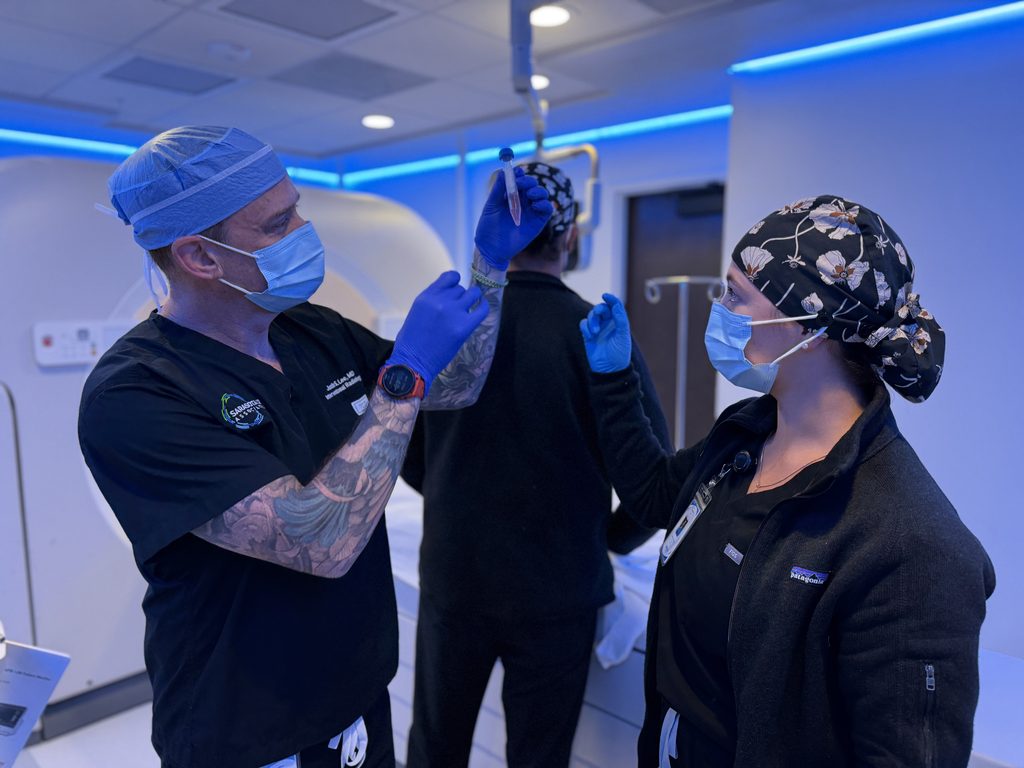
What Does an Interventional Radiologist Actually Do?
A diagnostic radiologist interprets images such as CT scans, MRIs, X-rays, and ultrasounds.
An interventional radiologist also interprets imaging but uses it as a live roadmap during procedures.
Depending on the condition, that may mean:
- Guiding a needle into a suspicious area to obtain a biopsy
- Using a catheter to reach a blood vessel that is bleeding
- Blocking blood flow to an enlarged prostate, uterine fibroids, inflamed arthritic knees, hemorrhoids, or certain tumors
- Delivering treatment directly to certain tumors in the liver or kidneys
- Placing ports or other devices needed for medical treatment
- Draining abnormal fluid collections
The specific procedure depends on the patient’s condition, imaging, medical history, and treatment goals.
The Society of Interventional Radiology describes IR as a medical specialty that combines advanced imaging with minimally invasive procedures to diagnose and treat conditions throughout the body.
Is Interventional Radiology Surgery?
Interventional radiology is not the same as traditional surgery.
Many IR procedures are performed through a small puncture in the skin rather than a larger surgical incision. Needles, wires, or catheters are guided to the treatment area using real-time medical imaging.
For some procedures, this can mean less physical trauma, a shorter recovery, and less need for general anesthesia or an overnight hospital stay.
Some IR procedures can also be performed with local anesthesia and sedation in an outpatient setting.
That does not mean every interventional radiology procedure is minor or that IR is right for every patient. The appropriate treatment depends on the condition and the individual patient.
The difference is that an interventional radiologist may be able to reach and treat a problem in a different way from traditional surgery.
Embolization: One of the Core Tools of Interventional Radiology
One of Dr. Lee’s major areas of expertise is embolization.
In simple terms, embolization uses a catheter to reach a blood vessel and intentionally reduce or stop blood flow to a targeted area.
Embolization can be used to treat conditions including:
- Enlarged prostate
- Uterine fibroids
- Arthritic knee pain
- Hemorrhoids
- Certain tumors
Examples include prostate artery embolization for BPH, uterine fibroid embolization, genicular artery embolization for certain patients with knee osteoarthritis, hemorrhoidal artery embolization, and embolization used in some cancer treatments.
The common thread is precision: imaging helps the physician reach the specific blood vessels involved.
Why Haven’t More Patients Heard About Interventional Radiology?
Historically, interventional radiologists often worked primarily inside hospitals and received patients through referrals from other physicians.
A patient might have undergone an interventional radiology procedure without realizing that IR was its own medical specialty.
Dr. Lee saw this throughout his career. He has described interventional radiology as a specialty that plays a significant role in patient care but is still not well understood by the public.
That matters because patients cannot ask about an option if they do not know it exists.
Someone with an enlarged prostate may know about medication or surgery but may never have heard of prostate artery embolization. A woman with uterine fibroids may not know that an image-guided treatment is available. The same can be true for patients dealing with knee arthritis, hemorrhoids, or other conditions.
Not every patient will be a candidate for an interventional radiology procedure.
But knowing the specialty exists gives patients another option to ask about.
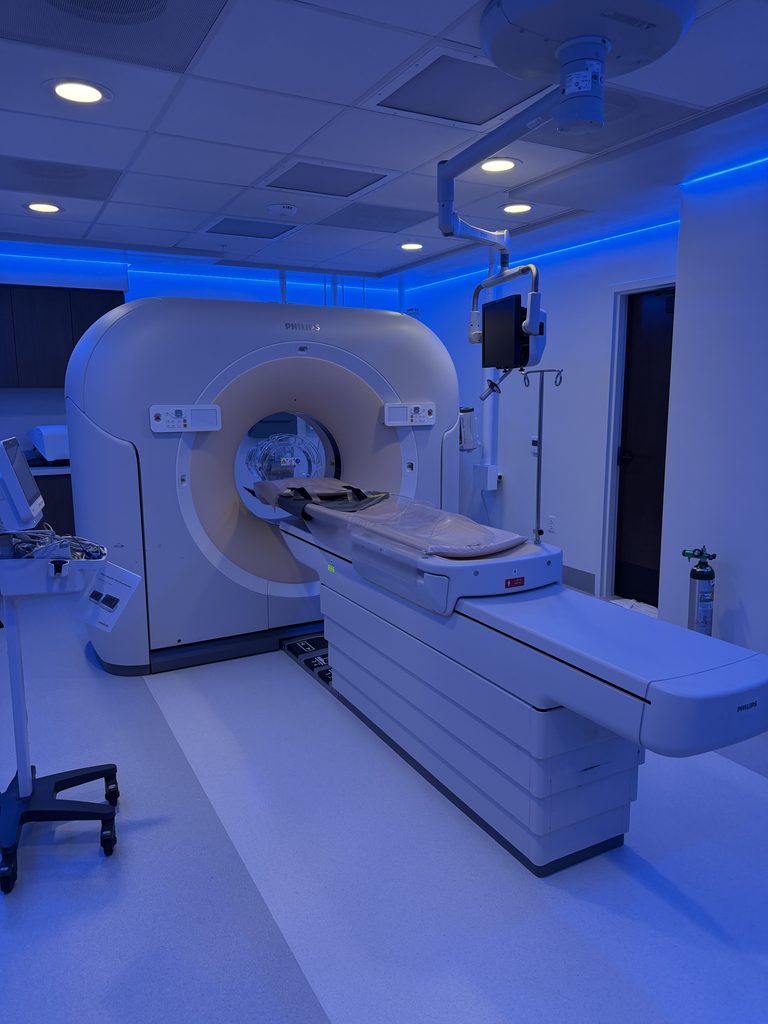
What Is Different About Outpatient Interventional Radiology?
Dr. Lee spent much of his career practicing inside a large hospital system and helped build the interventional radiology program at Sarasota Memorial Hospital.
Sarasota IR Associates grew from his interest in creating a setting focused specifically on outpatient interventional radiology.
For appropriate patients, an independent outpatient setting can allow more time for consultation, imaging review, and discussion of treatment options.
It is not meant to replace hospitals. Hospitals remain the appropriate setting for emergencies, major surgery, and many complex medical conditions.
An outpatient IR practice offers another option when care can safely be delivered outside the hospital.
Outpatient interventional radiology centers can use the same types of advanced imaging and procedural technology found in hospital IR suites. Because an independent practice is focused specifically on image-guided procedures, it may also choose to invest in specialized technology tailored to the treatments it performs.
For some procedures, receiving care in an independent outpatient setting may also result in lower facility costs or lower out-of-pocket expenses than hospital-based care, depending on the procedure and a patient’s insurance coverage.
What Happens During an Interventional Radiology Consultation?
At Sarasota IR Associates, the consultation is a medical visit, not simply a pre-procedure formality.
The team reviews available records, imaging, medications, and the reason for the visit. Dr. Lee then discusses the proposed procedure, alternatives, risks, recovery, and realistic expectations.
Sometimes a procedure makes sense. Sometimes additional testing, another specialist, or more time is the better next step.
Patient education is a major part of the process. Dr. Lee believes patients should understand their condition, see their imaging when appropriate, know what their options are, and have enough information to participate in the decision.
When Should You Ask About Interventional Radiology?
It may be worth asking about IR if:
- You have been told you need a procedure and want to understand less-invasive options
- Your condition may be treated with embolization or another image-guided technique
- You want to know if outpatient treatment may be available
- You want a second opinion about a minimally invasive approach
- You are concerned about recovery time, general anesthesia, or a hospital stay
A consultation does not commit you to a procedure.
It gives you a chance to understand what interventional radiology may be able to offer in your specific situation.
Frequently Asked Questions About Interventional Radiology
What is interventional radiology?
Interventional radiology, or IR, is a medical specialty that uses imaging such as X-ray, fluoroscopy, CT, MRI, and ultrasound to guide minimally invasive procedures inside the body.
What does an interventional radiologist do?
An interventional radiologist is a physician trained to use medical imaging to perform minimally invasive procedures such as biopsies, embolization, drainage procedures, vascular treatments, and certain tumor treatments.
Is interventional radiology less invasive than surgery?
Many IR procedures use a small skin puncture rather than a larger surgical incision. Depending on the procedure, this may mean less physical trauma and a shorter recovery than traditional surgery.
Do interventional radiology procedures require general anesthesia?
Not always. Many procedures can be performed using local anesthesia and sedation. The type of anesthesia depends on the procedure and the patient.
Can interventional radiology be done as an outpatient procedure?
Yes. Many IR procedures can be performed in an outpatient setting, allowing patients to return home the same day when medically appropriate. This depends on the procedure and the patient’s medical needs.
What conditions can interventional radiology treat?
IR can be used to diagnose and treat conditions involving blood vessels, enlarged prostate, uterine fibroids, arthritic knee pain, hemorrhoids, internal bleeding, certain tumors, and other medical problems.
Is interventional radiology right for everyone?
No. Not every condition can be treated with interventional radiology, and not every patient is a candidate for a minimally invasive procedure. A consultation helps determine which options may be appropriate.
Another Option Is Worth Knowing About
Interventional radiology often works alongside surgery, primary care, oncology, urology, and other medical specialties.
For many patients, it provides treatment options they did not know existed.
You do not need to become an expert in interventional radiology.
You only need to know enough to ask one more question:
Is there a minimally invasive option for this?
Sarasota IR Associates is located at 2001 Siesta Drive, Suite 100, Sarasota, Florida. To request a consultation with Dr. Justin Lee and the Sarasota IR team, visit SarasotaIR.com or call (941) 777-4723.